
Hello, this is Keegan Rubingh. I’m a computer engineering major at UW Madison, and I just completed my second semester here. I struggle with a condition called misophonia, which led to me having a very weird freshman year. Because of that, I’ve chosen to write on my own experiences dealing with Misophonia, in hopes that it will help people recognize and understand the condition. Please note that this blog is quite a bit longer than usual. I feel this is necessary since it covers a more serious topic.
What is misophonia?
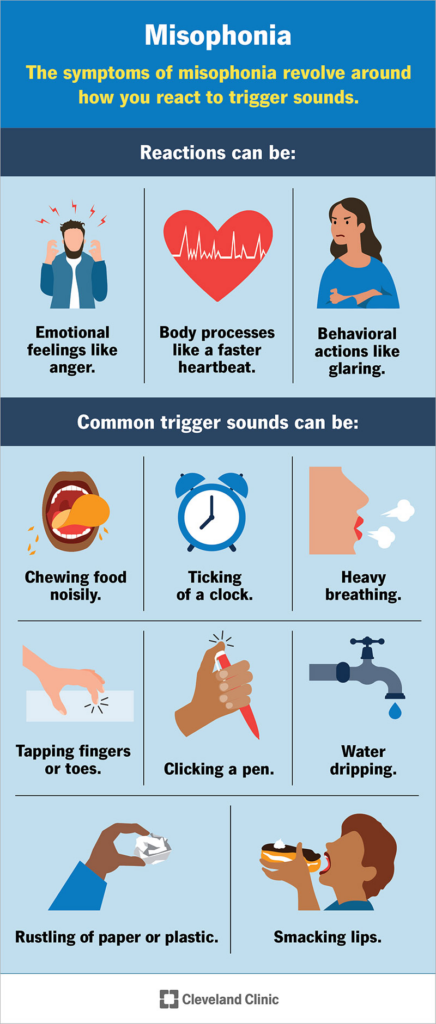
“Misophonia” – Cleveland Clinic – https://my.clevelandclinic.org/health/diseases/24460-misophonia
(unliscensed, but falls under fair use)
Misophonia is a neurological condition which causes extreme emotional reactions to specific noises. While it is perfectly normal to be annoyed by sounds to some degree, misophoia goes far beyond simple annoyance. The emotional reactions are extreme, and different for every afflicted person. They commonly manifest as overwhelming senses of fear and/or anger, impulsive actions, difficulty concentrating, physical reactions such as tensing up, or any combination of these symptoms.
How does the condition work?
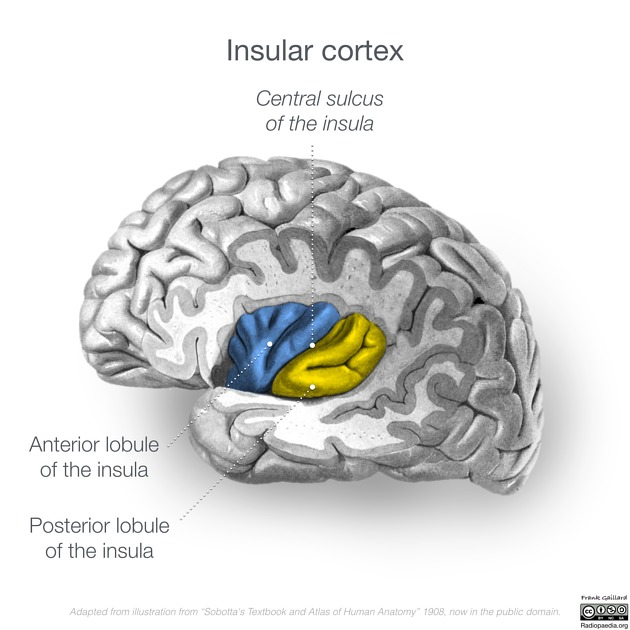
“Insular Cortex” – Radiopedia – Public domain – https://radiopaedia.org/articles/5829
Misophonia is not an issue with how your ears receive audio, nor how your brain processes it. It’s actually an emotional disorder. The condition is caused by abnormalities deep within your brain. Sounds most people are able to ignore end up being labelled as highly important. This forces the brain’s attention to them as if they were an active danger to the person’s safety, and leads to the strong emotional response seen in misophonia. Worse still, the emotional effects of misophonia feed into themselves, which can lead to the condition worsening with exposure
Impacts of Misophonia
Misophonia is a lifelong condition. There is no cure, it doesn’t recede naturally, and the symptoms can only be partially suppressed. The only way to treat the condition is by blocking out the noises and learning to deal with the stress the emotions cause.
Since one of my triggers is coughing, an entirely involuntary and common noise, this condition makes it extremely difficult for me to even be near other people. The best way I’ve found to deal with it is with its effects is to block out all noise using earbuds playing music. Even earmuffs and earplugs don’t work for me, as while they heavily muffle noise, they don’t fully block it out.
So overall…
Misophonia is a difficult condition to live with, and can have a profound impact on one’s life. However, the condition and its symptoms can be managed, and they become far easier to manage with help. If you believe you may have misophonia, talk to your doctor or a trusted individual in your life. The earlier you take this step, the easier it will be to manage the symptoms going forward, so it’s important to act quickly.